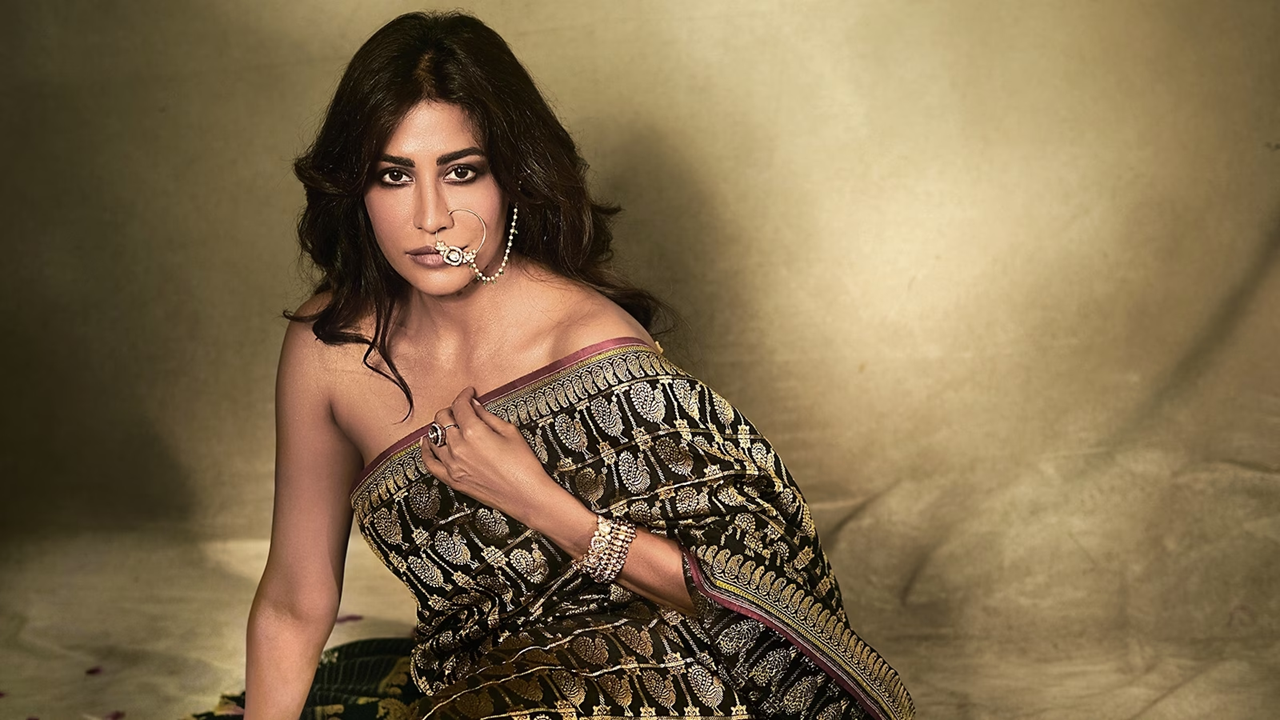
Chitrangda Singh on Power, Politics and Perception in Bollywood: “You Have to Fight—and Trust Fate”
With over two decades in the industry, the actress opens up about insider power games, audience judgment, and why actors don’t always control how women are portrayed on screen.

Having spent more than 20 years navigating the Hindi film industry, Chitrangda Singh has witnessed its inner workings from close quarters—its opportunities, its hierarchies, and its unspoken power dynamics. In a recent interaction following the release of Raat Akeli Hai: The Bansal Murders, the actress candidly reflected on how influence and power often shape careers in Bollywood, drawing parallels between real life and the themes explored in her latest film.
Chitrangda believes that whenever fame, money, and visibility are involved, obstacles are inevitable. According to her, the higher the stakes, the more people stand between an individual and their growth. She feels that survival in such an environment requires a combination of resilience and luck. Looking back at her own journey, she admits it wasn’t purely about fighting battles or leaving things to destiny—it was a mix of both. In her words, relying on just one of the two is never enough.
The actress, who made a striking debut with Hazaaron Khwaishein Aisi and later appeared in films like Yeh Saali Zindagi, Desi Boyz, Baazaar, and Bob Biswas, has often taken unconventional career breaks and returns—something she acknowledges hasn’t always been easy in an industry driven by constant visibility. Yet, she maintains that every phase taught her something about patience, perspective, and self-belief.

Shifting focus to the ongoing debate around the portrayal of women in mainstream commercial cinema, Chitrangda also weighed in on the criticism faced by Housefull 5. While conversations online have accused the film of objectifying its female characters and relying on jokes aimed at women’s bodies, the actress offered a more nuanced take on the issue. She pointed out that when actors agree to a script, they respond to the written material—not a detailed visual breakdown of how scenes will eventually be shot. Beyond the screenplay, she says, much of the final presentation lies in the director’s hands.
Chitrangda clarified that she isn’t trying to defend or justify any questionable creative choices. Instead, she emphasized that actors often have limited control over how physical comedy—especially involving women—ultimately lands on screen. She acknowledged that such comedy can sometimes feel uncomfortable to watch, even if it’s meant to entertain. According to her, the problem arises when certain moments fail to land as intended; that’s when criticism becomes louder. When they work, however, audiences tend to laugh without questioning them.
Drawing comparisons with Hollywood, she noted that physical comedy has long existed across cinema cultures, citing films led by actors like Jim Carrey and Eddie Murphy, as well as older international comedies that featured similar exaggerated humor. For Chitrangda, the difference lies not in intent but in reception—how times have changed and how audiences now engage more critically with what they see.
She also referred to how films like Dhurandhar sparked debates around tone and content, especially regarding violence. In her view, every genre follows its own storytelling grammar. Just as violence may be integral to certain narratives, exaggerated physical comedy defines others. Whether one agrees with it or not, she believes it’s ultimately a creative choice.
On a personal level, Chitrangda admits she doesn’t judge films like Housefull 5, but she also acknowledges that she may not always feel comfortable watching certain scenes. She feels some moments could have been handled differently, yet warns against becoming overly moralistic or harsh in judgment. For her, cinema deserves a certain creative allowance, and audiences should decide for themselves what aligns with their sensibilities.
As someone who has balanced meaningful cinema with mainstream projects, Chitrangda Singh’s perspective reflects the complexity of being an actor today—caught between creative intent, audience expectations, and an industry where power and perception often dictate the narrative.
Stay connected with us for the latest and exclusive updates on global entertainment—only here on Indori Nerd!