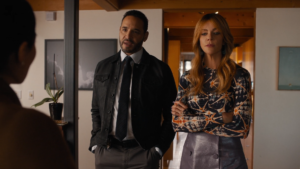

Things spiral fast when American Homestead Bank suffers a cyberattack, forcing the government to freeze financial activity. Predictably, chaos erupts as people panic, businesses stall, and riots break out. Meanwhile, Dreyer tries to wrest control of the crisis, but Mitchell shuts him down.
George, still holding Evan Green in custody, doubles down on his interrogation. Green remains smug, but evidence keeps piling up, including a wiped hard drive. His lawyer, Bob, warns him, without proper legal protections, staying silent isn’t an option.
The commission’s credibility crumbles as rumors, fueled by Monica Kidder, spread like wildfire. Even George’s allies in the media start turning on him. Melissa suggests a strategic play, having George testify to show transparency, but he refuses. Instead, Kidder is invited in, though it’s clear she wants influence, not solutions.
Desperate for answers, Valerie visits Mr. McKenna, the scientist behind Proteus, who reveals its terrifying nature. A neurological weapon that causes memory loss, psychosis, and hallucinations, all symptoms George is experiencing. He’s not just being targeted politically; his mind is under attack.

As the commission struggles, Roger follows a lead from the Idaho server farm, tuning into an old radio frequency. What he hears shakes him. Meanwhile, Dreyer pressures Mitchell to push George out before another tragedy forces his hand. His veiled threat? Alex might not be safe.
Tensions peak as Sheila demands George to step down, convinced he’s unraveling. Meanwhile, Lyndon’s men approach Roger with an ultimatum, expose George’s instability or suffer the consequences. Roger refuses, and it costs him. Later that night, he’s drugged and drowned, his murder staged as an overdose.
George, dealing with his ghosts, passes his psych evaluation, mostly. He lies about hearing music, aware that Proteus is warping his mind. But with no clear proof, he orders Carl to torture Green for answers. It backfires, Green’s crime isn’t terrorism, just money laundering.
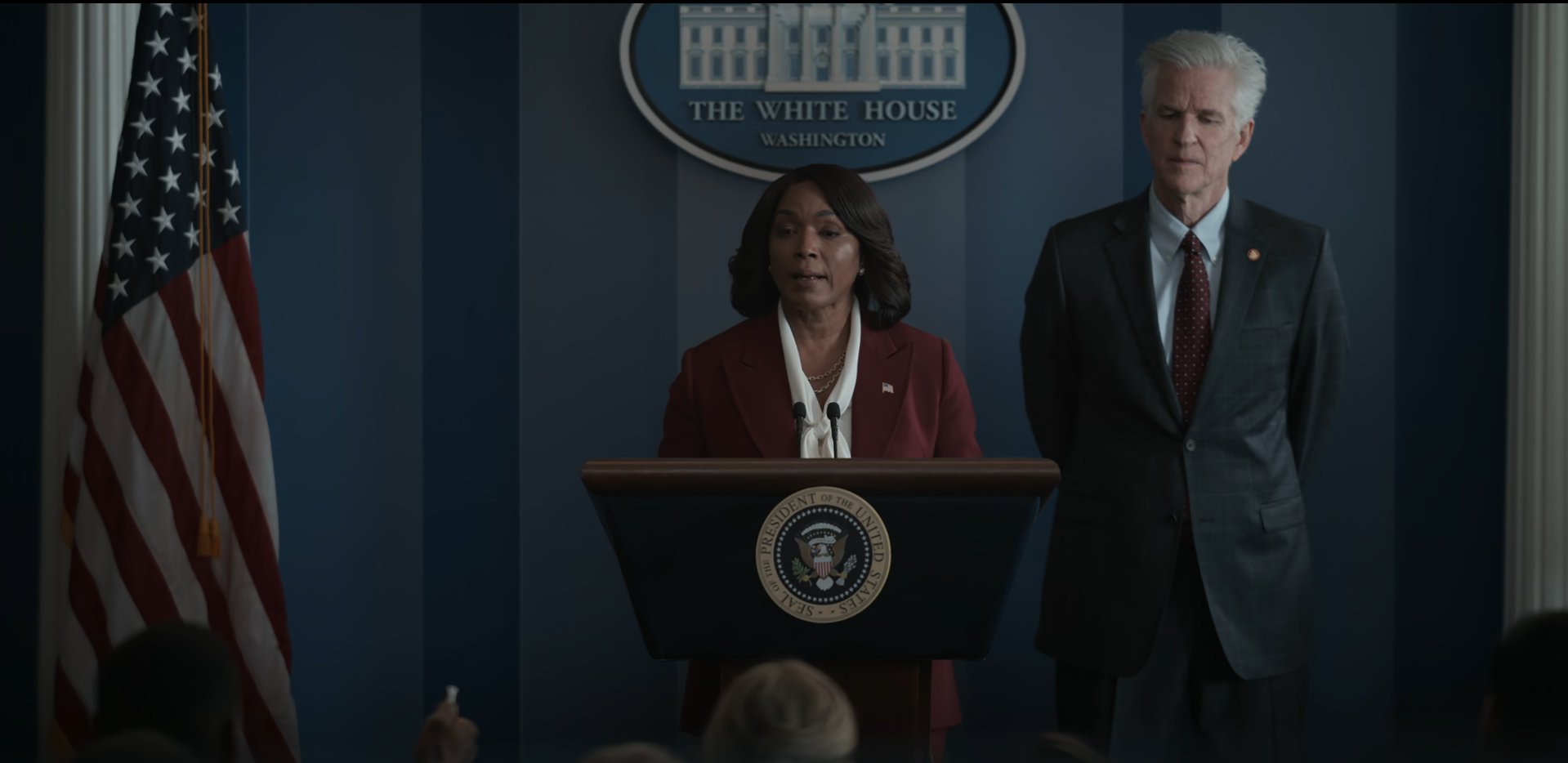
The next morning, news breaks that the bank attack is linked to the Sinecure, a group responsible for a previous attack. At the same time, George learns of Roger’s death. Staring at his chaotic journal, he realizes just how deep this goes.
The series is no longer just about political sabotage; it’s about the slow, deliberate breakdown of George’s mind. The question isn’t just whether he can stop the enemy, it’s whether he can trust his thoughts.
Robert De Niro continues to deliver, balancing paranoia and determination with terrifying precision. His interrogation of Green is particularly intense, showcasing a man who refuses to admit he’s losing control. Meanwhile, Roger’s arc reaches a tragic but inevitable end. His final moments add weight to the stakes, proving Lyndon is more than just a background schemer.
The episode does juggle a lot, cyberattacks, political maneuvering, and mind-control conspiracies, but it’s all compelling. The real brilliance lies in the psychological toll. Every scene leaves us wondering: is George making mistakes, or is Proteus rewriting reality?